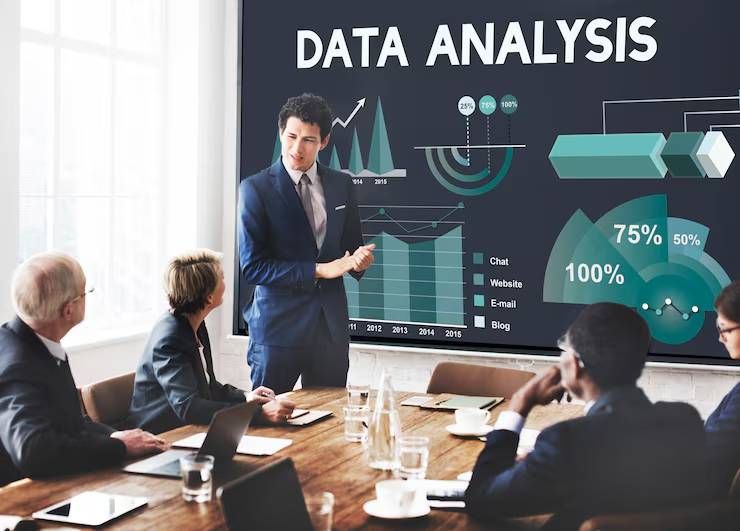
A data analytics certification is a professional credential that demonstrates knowledge of collecting, organizing, analyzing, and interpreting data. These programs help learners understand how organizations use information to evaluate business performance, identify patterns, prepare reports, and support decision-making.
The growth of data analytics is closely connected to the expansion of digital technology, cloud computing, online transactions, and business information systems. Organizations across finance, healthcare, retail, manufacturing, education, and technology generate large amounts of information that require systematic analysis.
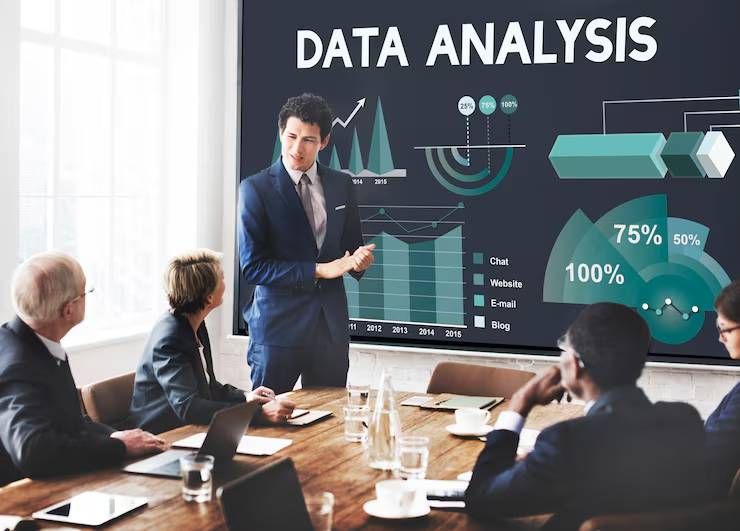
Data analytics certification programs are available through universities, technology companies, professional organizations, and online learning platforms. They cover subjects ranging from spreadsheet analysis and SQL databases to Python programming, business intelligence, statistical methods, and machine learning.
Why Data Analytics Certification Matters in Modern Industries
Data analytics has become an important part of business operations because organizations use information to understand customers, monitor performance, manage resources, and identify operational challenges.
A structured certification course can help learners develop practical analytical knowledge and understand commonly used software platforms. It may also provide evidence of specific technical skills when applying for relevant professional opportunities.
Major applications include:
Business Intelligence: Analyzing organizational performance through dashboards, reports, and key performance indicators.
Financial Analysis: Examining financial statements, revenue patterns, budgets, and market information.
Healthcare Analytics: Studying operational records, patient information, and healthcare system performance.
Marketing Analytics: Evaluating customer behavior, campaign performance, and digital engagement.
Manufacturing Analytics: Monitoring production output, equipment performance, and supply chain information.
Retail Analytics: Understanding purchasing patterns, inventory movement, and customer preferences.
Data analytics knowledge is relevant to students, graduates, business professionals, researchers, and individuals seeking to develop technical skills.
Major Types of Data Analytics Certification Programs
Data analytics certifications differ according to learning objectives, technical requirements, assessment methods, and professional applications.
Beginner Data Analytics Certifications
Beginner programs introduce fundamental analytical concepts without requiring extensive programming experience.
Common subjects include:
Data collection and organization.
Spreadsheet analysis using Microsoft Excel.
Basic statistics and probability.
Data cleaning and preparation.
Introduction to SQL.
Data visualization fundamentals.
Basic reporting and dashboard development.
These courses help learners understand how raw information is converted into meaningful reports.
Professional Data Analytics Certifications
Professional certifications focus on practical analytical methods and the software used in business environments.
Typical subjects include SQL queries, Python programming, statistical analysis, business intelligence, data visualization, and analytical reporting.
Examples include the Google Data Analytics Professional Certificate, Microsoft Power BI Data Analyst certification, and IBM Data Analyst Professional Certificate.
Advanced Data Analytics Certifications
Advanced programs cover more specialized technical subjects and analytical approaches.
Common areas include:
Predictive analytics.
Statistical modeling.
Machine learning fundamentals.
Advanced Python programming.
Big data technologies.
Cloud-based data analytics.
Advanced business intelligence.
These programs may require prior knowledge of statistics, programming, databases, or mathematics.
Essential Skills Covered in Data Analytics Certification Courses
Data analytics training combines technical abilities with problem-solving and communication skills. Learners generally study how to convert unorganized information into structured datasets and meaningful business insights.
Technical Data Analytics Skills
Important technical skills include:
SQL and Database Management: Retrieving, filtering, joining, and organizing information stored in relational databases.
Microsoft Excel: Using formulas, pivot tables, spreadsheets, and data analysis functions.
Python Programming: Applying Python libraries such as Pandas and NumPy for data manipulation and analysis.
Power BI: Creating interactive dashboards, reports, and business intelligence visualizations.
Tableau: Developing visual reports and presenting analytical findings.
Statistical Analysis: Understanding averages, distributions, correlations, probability, and regression.
Data Cleaning: Identifying missing values, duplicate records, and inconsistencies in datasets.
Business and Analytical Skills
Apart from technical knowledge, certification programs may develop business communication, critical thinking, problem-solving, data interpretation, and presentation skills.
These abilities help analysts explain complex information in a clear format that managers and other decision-makers can understand.
Popular Data Analytics Certifications and Professional Credentials
Several technology companies and educational organizations provide recognized data analytics credentials. Their learning formats and assessment methods differ.
Certification | Issuing Organization | Main Focus |
|---|---|---|
Google Data Analytics Professional Certificate | Foundational data analytics | |
Microsoft Power BI Data Analyst Associate | Microsoft | Business intelligence and Power BI |
IBM Data Analyst Professional Certificate | IBM | Python, SQL, Excel and visualization |
Tableau Certified Data Analyst | Tableau | Data visualization and analysis |
SAS Certified Specialist | SAS | Statistical and analytical software |
Microsoft's Power BI Data Analyst Associate credential assesses data preparation, modeling, visualization, analysis, and security. Its PL-300 examination also covers Power Query and DAX.
IBM's Data Analyst Professional Certificate covers practical analytical tools, including Excel, SQL, Python, JupyterLab, and Cognos Analytics.
A course completion certificate and an independently assessed professional certification are not necessarily equivalent. Learners should examine the issuing organization, assessment requirements, credential validity, and recognition within their intended industry.
Online Data Analytics Learning Platforms and Educational Resources
Online learning platforms provide structured lessons, practical exercises, and assessment materials for different experience levels.
Some commonly used educational platforms include:
Coursera: Hosts professional certificate programs from universities and technology companies.
edX: Provides university-level courses covering statistics, data science, and analytics.
Udemy: Contains courses covering Excel, SQL, Python, and business intelligence.
Microsoft Learn: Provides Power BI learning paths and certification preparation resources.
IBM SkillsBuild: Provides learning resources covering data and emerging technologies.
Kaggle: Provides datasets, notebooks, and practical analytical exercises.
Learners can also develop practical experience using public datasets, spreadsheet applications, database environments, and dashboard development software.
Career Applications of Data Analytics Certification
Data analytics skills are used across different professional functions. Certification programs can provide structured learning, although professional progression also depends on practical experience, education, and technical ability.
Common career paths include:
Data Analyst: Examines datasets and prepares analytical reports.
Business Intelligence Analyst: Develops dashboards and monitors business performance.
Financial Data Analyst: Studies financial information, budgets, and performance indicators.
Marketing Data Analyst: Evaluates customer behavior and campaign performance.
Operations Analyst: Examines production, logistics, and operational processes.
Junior Data Scientist: Applies statistical and programming methods to analytical problems.
Practical projects, portfolio development, and knowledge of industry-specific datasets can help demonstrate analytical capabilities.
Recent Developments in Data Analytics Education, 2024–2026
Data analytics education is changing as organizations adopt artificial intelligence, cloud computing, and automated reporting systems. Certification programs are gradually incorporating newer technologies and practical analytical applications.
Important developments include:
Artificial Intelligence Integration: Courses increasingly introduce AI-assisted data analysis, automated reporting, and machine learning concepts.
Cloud-Based Analytics: Training increasingly covers cloud data platforms, scalable databases, and online business intelligence environments.
Generative AI Applications: Learners are exploring how AI tools can assist with SQL queries, Python coding, data interpretation, and report preparation.
Practical Project-Based Learning: More learning pathways emphasize hands-on exercises, real-world datasets, and portfolio development.
Government Digital Skill Development: India's Skill India Digital Hub has expanded its AI and data science-related learning ecosystem. Government information published in 2026 describes NSQF-aligned qualifications covering artificial intelligence, machine learning, and data science.
Data Analytics Certification Regulations and Recognition in India
Data analytics certifications in India come from universities, technology companies, professional organizations, and private educational institutions. Their recognition depends on the issuing organization, credential structure, and applicable educational requirements.
The University Grants Commission (UGC) oversees higher education standards, while the All India Council for Technical Education (AICTE) has responsibilities relating to technical education within its regulatory framework.
The National Council for Vocational Education and Training (NCVET) oversees vocational education and training standards, including recognized awarding bodies and qualifications.
Important considerations when evaluating a certification include:
Accreditation or recognition of the issuing institution.
Course curriculum and technical coverage.
Examination and practical assessment requirements.
Credential verification procedures.
Alignment with relevant industry standards.
Data privacy and information security practices.
A private online certificate should not automatically be considered equivalent to a university degree or a government-recognized vocational qualification.
Frequently Asked Questions About Data Analytics Certification
1. Which data analytics certification is suitable for beginners?
Beginner learners can explore foundational programs such as the Google Data Analytics Professional Certificate and IBM Data Analyst Professional Certificate. These introduce analytical concepts, spreadsheets, databases, and visualization.
2. What skills are required for a data analytics certification?
Common requirements include spreadsheet knowledge, SQL, statistics, data visualization, analytical thinking, and familiarity with tools such as Python, Tableau, or Power BI. Advanced programs may require programming experience.
3. What is the Microsoft Power BI Data Analyst certification?
The Microsoft Power BI Data Analyst Associate certification is a professional credential that assesses data preparation, modeling, visualization, analysis, and management using Power BI.
4. Can I learn data analytics through online certification courses?
Yes. Online platforms such as Coursera, edX, Udemy, and Microsoft Learn provide structured courses covering different analytical subjects, technical tools, and practical exercises.
5. What career opportunities are associated with data analytics certification?
Related career paths include data analyst, business intelligence analyst, financial data analyst, marketing analyst, operations analyst, and junior data scientist. Actual eligibility depends on education, technical skills, and practical experience.
Conclusion
Data analytics certification programs provide structured learning in data interpretation, statistical analysis, programming, and business intelligence. Credentials from technology companies, universities, and professional organizations cover different technical requirements and industry applications. AI, cloud computing, and automated reporting are increasingly influencing modern analytics education. Practical experience, recognized credentials, and technical knowledge are important considerations when evaluating professional learning pathways.