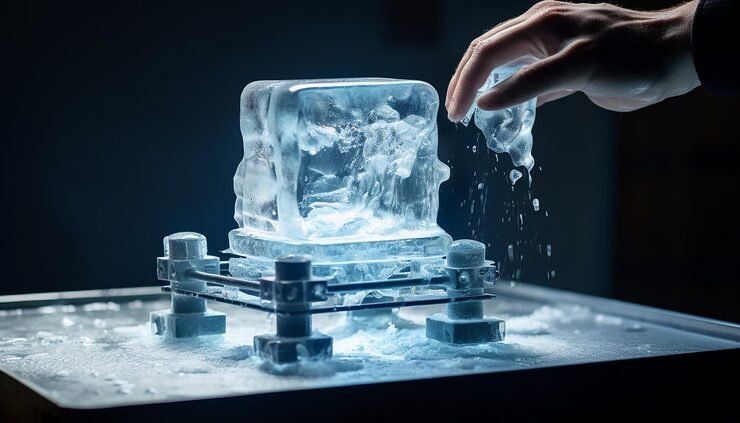
Ice machines are refrigeration appliances designed to produce ice by removing heat from water. They are commonly used in restaurants, hotels, hospitals, supermarkets, food processing facilities, fisheries, beverage preparation areas, and residential kitchens. Depending on their design, ice machines can produce ice cubes, flakes, nuggets, crushed ice, or solid ice blocks.
Context
Ice machines are refrigeration appliances designed to produce ice by removing heat from water. They are commonly used in restaurants, hotels, hospitals, supermarkets, food processing facilities, fisheries, beverage preparation areas, and residential kitchens. Depending on their design, ice machines can produce ice cubes, flakes, nuggets, crushed ice, or solid ice blocks.
The development of mechanical ice production changed how households and businesses obtained and stored ice. Before modern refrigeration technology, people depended on natural ice collected from frozen lakes and rivers. As refrigeration systems developed, mechanical ice makers became increasingly common because they could produce ice throughout the year without depending on seasonal weather conditions.
Today, an ice machine generally uses a refrigeration system, water supply, freezing surface, and collection mechanism to create and store ice. Different models are designed for different production capacities and applications. Small countertop ice makers are suitable for household use, while commercial ice machines can produce larger quantities for restaurants, hotels, healthcare facilities, and industrial operations.
Understanding ice machine types, components, working principles, and key features helps explain how these appliances support modern food preparation, cooling, and storage activities.
Importance
Ice machines play an important role in industries where temperature control, food preservation, and chilled beverages are necessary. They provide a consistent supply of ice for everyday activities and specialized operational requirements.
Importance in Different Industries
Ice production supports several industries and applications:
Food and Beverage: Restaurants, cafes, hotels, and catering facilities use ice cubes and crushed ice for beverages, food presentation, and ingredient cooling.
Healthcare: Hospitals and healthcare facilities may use ice for certain cooling applications and patient-related requirements, following appropriate hygiene procedures.
Fisheries: Flake ice helps maintain low temperatures during fish handling, transportation, and temporary storage.
Food Processing: Food manufacturing facilities use different ice forms to help control temperatures during selected production processes.
Supermarkets: Ice machines support seafood displays, chilled food arrangements, and beverage preparation.
Residential Use: Household ice makers provide ice for drinking water, cold beverages, and everyday kitchen activities.
Common Problems Addressed by Ice Machines
Traditional ice trays and manual freezing methods require preparation time and produce limited quantities. Commercial ice machines address this limitation through automated freezing and collection processes.
They also help maintain a more consistent ice supply during periods of regular demand. However, production capacity depends on machine specifications, surrounding temperature, water conditions, and operating requirements.
Types of Ice Machines
Ice machines are available in different designs according to their ice shape, production method, installation arrangement, and intended application.
Cube Ice Machines
Cube ice machines produce solid ice pieces in square, rectangular, or cylindrical shapes. They are commonly used in restaurants, bars, hotels, cafes, and residential kitchens.
Cube ice generally melts more slowly than smaller ice particles of similar material conditions, making it suitable for chilled beverages. Production capacity varies according to the freezing system and machine size.
Flake Ice Machines
Flake ice machines produce thin, irregular ice pieces that can be distributed around products. Their shape allows them to cover surfaces and make contact with different materials.
Common applications include:
Fish and seafood preservation.
Food processing operations.
Fresh produce cooling.
Laboratory temperature-control activities.
Nugget Ice Machines
Nugget ice machines create small, soft pieces of compressed ice. Nugget ice contains small air spaces and has a different texture from conventional solid cubes.
It is commonly used in healthcare environments, beverage preparation, restaurants, and selected food-related applications.
Crushed Ice Machines
Crushed ice machines break larger ice pieces into smaller fragments. They are used in beverage preparation, food displays, and certain cooling applications.
Some machines include integrated crushing mechanisms, while others use separate ice-processing equipment.
Block Ice Machines
Block ice machines produce large, solid blocks of ice. These systems are generally associated with industrial ice production, seafood handling, transportation, and selected commercial cooling activities.
Their production systems may require larger freezing equipment and dedicated storage arrangements.
Undercounter and Countertop Ice Machines
Undercounter ice machines are designed to fit beneath kitchen counters or within commercial preparation areas. Countertop ice makers are smaller appliances intended for convenient installation on kitchen surfaces.
Both types are commonly used where available space and production requirements influence equipment selection.
Components of an Ice Machine
An ice machine contains several connected components that work together to freeze water, release ice, and maintain the refrigeration cycle.
Compressor
The compressor is a central component of the refrigeration system. It compresses refrigerant gas and increases its pressure and temperature before sending it toward the condenser.
Condenser
The condenser releases heat from the refrigerant into the surrounding environment. Depending on the equipment design, heat may be removed through air cooling or water cooling.
Evaporator
The evaporator is the component where refrigerant absorbs heat from the water or freezing surface. As heat is removed, the water gradually freezes and forms ice.
Expansion Device
The expansion valve or capillary tube reduces refrigerant pressure before it enters the evaporator. This allows the refrigerant to absorb heat during the next stage of the refrigeration cycle.
Water Distribution System
The water distribution system supplies water to the freezing surface. It may include a water inlet valve, pump, pipes, filters, and distribution channels.
Ice Collection and Storage Bin
After ice formation, a harvesting mechanism releases the ice into a collection area. Many commercial machines include an insulated storage bin that holds the produced ice until it is collected.
Control System and Sensors
Electronic controls, temperature sensors, water-level sensors, and other monitoring components regulate the operating cycle. They help manage water supply, freezing, harvesting, and storage conditions.
Working Principles of Ice Machines
Most modern ice machines operate through a vapor-compression refrigeration cycle. This process transfers heat from water or a freezing surface into the surrounding environment.
Water Supply and Preparation
The process begins when water enters the machine through an inlet connection. Depending on the equipment, the water may pass through a filtration system before reaching the freezing area.
Refrigeration and Freezing
The compressor circulates refrigerant through the refrigeration system. The refrigerant absorbs heat inside the evaporator, allowing the water on or around the freezing surface to become ice.
Ice Formation
Water gradually freezes according to the evaporator design and operating temperature. In cube machines, water freezes inside individual molds. In flake machines, a thin layer of ice forms on a refrigerated surface before being removed.
Ice Harvesting
Once the required ice formation is reached, the machine begins its harvesting stage. Some systems use a brief warming cycle or mechanical movement to release ice from the freezing surface.
Collection and Storage
The released ice falls into a storage bin or collection container. Sensors may monitor the storage level and pause production when the bin becomes full.
The following table explains the main stages:
| Operating Stage | Main Function |
|---|---|
| Water supply | Provides water for ice production |
| Refrigeration | Removes heat from the freezing area |
| Ice formation | Converts water into solid ice |
| Harvesting | Releases ice from the freezing surface |
| Collection | Transfers ice into the storage bin |
| Monitoring | Regulates the production cycle |
Recent Updates
Ice machine technology continues to develop through improvements in refrigeration systems, electronic controls, energy management, and environmental considerations.
Refrigerant Technology Developments
Refrigerant selection has become an important consideration in refrigeration equipment. Manufacturers and the wider cooling industry are examining alternatives with lower global warming potential, including selected natural refrigerants.
Carbon dioxide (R744), propane (R290), and other refrigerants are used in different refrigeration applications. Their suitability depends on equipment design, safety requirements, operating conditions, and applicable regulations.
Smart Controls and Automation
Modern ice machines increasingly incorporate electronic controls, digital displays, automatic production monitoring, and diagnostic functions.
Some equipment includes alerts for water shortages, storage-bin conditions, filter maintenance, and operating irregularities. These features help operators monitor machine activity.
Energy and Water Management
Manufacturers are focusing on refrigeration efficiency, improved insulation, heat transfer, and water management. Air-cooled and water-cooled systems have different operating requirements, so their energy and water use should be considered separately.
Hygiene-Focused Designs
Improved internal accessibility, removable components, filtration arrangements, and automated cleaning cycles are among the design developments found in modern equipment. Regular cleaning remains necessary regardless of the machine's automation features.
Laws or Policies
In India, ice machines used in food-related environments are influenced by food safety requirements, water quality standards, and environmental regulations governing refrigeration equipment.
FSSAI Food Safety Requirements
The Food Safety and Standards Authority of India (FSSAI) establishes hygiene and food safety requirements for food businesses. Its regulations require ice that comes into direct contact with food to be made using potable water and handled in a way that prevents contamination.
Food businesses must also maintain appropriate hygiene practices and comply with applicable Food Safety Management System requirements. https://fssai.gov.in/inspection/hygiene-requirements
Drinking Water Quality
The Bureau of Indian Standards (BIS) drinking water specification, IS 10500, provides quality requirements for potable water. FSSAI guidance also addresses water quality, storage, and periodic testing in applicable food operations.
Water filters, storage tanks, and distribution systems should be maintained appropriately to protect water quality.
Refrigerant and Environmental Regulations
India regulates ozone-depleting substances through the Ozone Depleting Substances (Regulation and Control) Rules under the Environment (Protection) Act, 1986.
India's refrigerant transition includes restrictions on hydrochlorofluorocarbons (HCFCs) in new equipment manufacturing from 2025. India has also ratified the Kigali Amendment, which establishes a phased reduction schedule for hydrofluorocarbons (HFCs) beginning in 2032. These measures influence refrigerant selection and refrigeration equipment development. https://ozonecell.nic.in/
Requirements can differ according to equipment type, business activity, and applicable local regulations.
Tools and Resources
Several technical resources help users understand ice machine operation, evaluate equipment specifications, and maintain appropriate operating conditions.
Equipment Manuals and Technical Documents
Manufacturer manuals provide information about installation, operating procedures, water connections, cleaning requirements, troubleshooting, and recommended maintenance intervals.
Energy Consumption Calculators
Refrigeration energy calculators can help estimate electricity consumption using machine power ratings and operating hours. Actual consumption may vary according to ambient temperature, water temperature, production demand, and equipment condition.
Water Quality Testing Resources
Recognized water-testing laboratories can assess potable water quality. These assessments are particularly relevant for machines producing ice intended for direct food contact.
Government and Technical Websites
Useful reference platforms include:
FSSAI: https://www.fssai.gov.in/ — Food safety regulations and hygiene guidance.
BIS: https://www.bis.gov.in/ — Indian standards and drinking water specifications.
Ozone Cell, MoEFCC: https://ozonecell.nic.in/ — Refrigerant-related environmental regulations.
ASHRAE: https://www.ashrae.org/ — Technical information about refrigeration and cooling systems.
FAQs
How Does an Ice Machine Work?
An ice machine uses a refrigeration system to remove heat from water. The water freezes on a refrigerated surface or inside molds, and the resulting ice is released into a collection bin.
What Are the Main Types of Ice Machines?
The main types include cube ice machines, flake ice machines, nugget ice machines, crushed ice machines, and block ice machines. Countertop and undercounter models are also available for different installation requirements.
What Are the Main Components of a Commercial Ice Machine?
A commercial ice machine generally contains a compressor, condenser, evaporator, expansion device, water distribution system, control system, and ice storage bin.
What Is the Difference Between Air-Cooled and Water-Cooled Ice Machines?
Air-cooled ice machines release heat into the surrounding air through a fan and condenser. Water-cooled machines use circulating water to remove heat from the refrigeration system. Their installation and operating requirements differ.
What Type of Water Is Required for Ice Machines?
Potable water is required for ice intended for direct contact with food or beverages. Appropriate filtration, water testing, and regular equipment cleaning help maintain hygiene and water quality.
Conclusion
Ice machines use refrigeration technology to convert water into different forms of ice for household, commercial, healthcare, and industrial applications. Their designs vary according to production capacity, ice shape, cooling method, and installation requirements. Understanding their components, working principles, and operating features provides useful knowledge about modern ice production. Food safety, water quality, equipment hygiene, and refrigerant regulations are also important considerations.