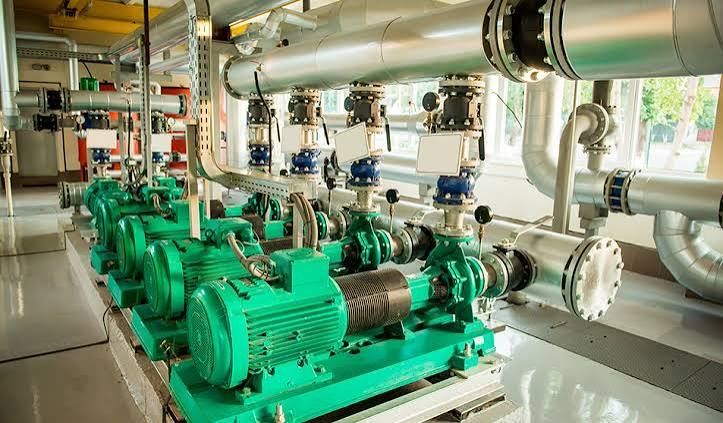
Industrial pump systems are mechanical arrangements used to move liquids from one location to another.
They are widely used in manufacturing plants, water treatment facilities, power stations, chemical processing units, agriculture, and other industrial environments. These systems help transport water, oil, wastewater, chemicals, and other fluids through pipelines and equipment.
Pumps have been used for centuries, beginning with simple mechanical devices designed to lift and transfer water. As industrial operations developed, pumping technology became more complex, allowing fluids to move through large networks under different pressure, temperature, and flow conditions.
Modern industrial process pump systems combine pumps with motors, pipelines, valves, sensors, and control equipment. Depending on the application, they may operate continuously or work only when a particular process requires fluid movement.
How Industrial Pumps Work
A pump generally transfers energy from a motor or another power source to a liquid. This energy allows the liquid to move through a pipe or overcome differences in elevation and pressure.
Two common pump categories are centrifugal pumps and positive displacement pumps. Centrifugal pumps use a rotating impeller to move liquid, while positive displacement pumps move a defined volume of fluid during each operating cycle.
Different applications require different pump designs. Industrial high pressure pump systems, for example, are designed to move fluids under higher pressure conditions, while industrial sewage pump systems handle wastewater that may contain suspended solids.
Common Types of Industrial Pump Systems
Industrial pumping technology includes several categories designed for specific operating conditions.
Industrial wastewater pump systems move wastewater through treatment facilities and industrial drainage networks.
Industrial submersible pump systems operate while submerged in the liquid being pumped.
Industrial boiler feed pump systems deliver water into boilers under required pressure conditions.
Industrial cooling water pump systems circulate water through cooling equipment.
Industrial oil pump systems move lubricating oil, fuel oil, and other industrial oils.
Custom industrial pump systems are configured for specific fluid characteristics, process conditions, or equipment arrangements.
Each type has different operating requirements, depending on the liquid, flow rate, pressure, and surrounding environment.
Importance
Industrial pump systems are important because many industrial processes depend on the continuous movement of liquids. Water circulation, equipment cooling, wastewater management, and fluid transfer all rely on pumping equipment.
These systems also affect everyday activities. Water treatment facilities use pumps to move water through treatment stages, while power plants depend on pumping equipment for cooling and boiler operations. Manufacturing facilities use pumps to transfer materials and maintain process conditions.
Supporting Industrial Operations
Industrial process pump systems help move fluids between storage tanks, processing equipment, and production lines. They may transport raw materials, circulate liquids during production, or move finished fluids to another stage.
The selection of a pump depends on factors such as liquid composition, required flow rate, operating pressure, temperature, and the distance the fluid must travel. These conditions influence pump design and operating arrangements.
Managing Wastewater and Environmental Processes
Industrial sewage pump systems and industrial wastewater pump systems play an important role in drainage and wastewater treatment. They move liquid waste from collection points toward treatment equipment or designated discharge systems.
Some wastewater contains solid particles, fibers, or other materials that can affect pump operation. Pump designs used in these environments may include features that help manage solids and reduce blockage risks.
Maintaining Pressure and Temperature
Industrial high pressure pump systems are used when fluid movement requires higher pressure, such as in certain cleaning, processing, and water treatment applications.
Industrial cooling water pump systems circulate water through heat exchangers and cooling equipment. Industrial boiler feed pump systems move water into boilers while meeting the pressure requirements of the operating process.
Recent Updates
Recent developments in industrial pumping technology have focused on energy use, automation, equipment monitoring, and integration with digital control systems. These changes reflect a broader movement toward connected industrial operations.
Variable Speed Pump Technology
Variable frequency drives can adjust motor speed according to process requirements. In applications with changing flow demand, this may help reduce unnecessary energy use compared with operating a pump at a constant speed.
The actual effect depends on the pump design, operating conditions, and control strategy. Variable speed operation is not suitable for every pumping application.
Industrial Pump Automation Systems
Industrial pump automation systems can coordinate pump operation using sensors, controllers, and predefined operating rules. They may start or stop pumps based on tank levels, pressure readings, flow conditions, or process schedules.
Industrial pump control systems can also coordinate multiple pumps. For example, a system may alternate between pumps or activate an additional pump when demand increases.
Digital Monitoring and Predictive Maintenance
Industrial pump monitoring systems increasingly use sensors to track operating conditions such as vibration, temperature, pressure, and motor current.
Monitoring data can help identify changes in equipment behavior. Unusual vibration or rising temperature may indicate a developing issue, although additional inspection is often needed to determine its cause.
| Technology | Main Function | Common Application |
|---|---|---|
| Variable frequency drive | Adjusts motor speed | Water circulation |
| Pressure sensor | Measures fluid pressure | Pipeline monitoring |
| Flow meter | Measures liquid flow | Process fluid transfer |
| Vibration sensor | Tracks mechanical movement | Pump condition monitoring |
| Automated controller | Coordinates operating actions | Multi-pump systems |
Greater Attention to Energy and Equipment Efficiency
Modern pump planning increasingly considers the relationship between pump performance, motor efficiency, pipeline design, and operating conditions.
Pump selection and system design influence energy consumption. Poorly sized equipment, restricted flow, leakage, and unnecessary pressure can affect the overall operation.
Tools and Resources
Industrial pump systems involve mechanical, electrical, and control components. Several tools and resources can help explain their operation and support technical planning.
Pump Selection and Calculation Tools
Pump selection calculators can estimate the relationship between flow rate, pressure, pump head, and power requirements. These tools generally require information about the liquid and the operating conditions.
Common technical resources include:
Pump head and flow rate calculators for basic hydraulic calculations.
Pipe sizing tools for estimating flow conditions through pipelines.
Pump performance curves showing flow rate against head.
Technical manuals explaining installation and operating requirements.
System diagrams showing pumps, valves, pipelines, and control components.
These resources provide general technical information. Actual equipment selection requires appropriate engineering assessment.
Monitoring and Control Resources
Industrial pump monitoring systems may use dashboards to display operating information collected from sensors and controllers.
Industrial pump automation systems may also use programmable logic controllers and supervisory control software to manage pump sequences and operating conditions.
Industrial pump installation services may involve activities such as equipment placement, pipeline connections, electrical integration, alignment, and commissioning. These activities depend on the equipment design and site requirements.
FAQs
What are industrial pump systems used for?
Industrial pump systems move liquids through manufacturing, water treatment, wastewater management, cooling, and other industrial processes. Their function depends on the type of pump and the operating environment.
What are industrial high pressure pump systems?
Industrial high pressure pump systems move fluids under relatively high pressure. They are used in applications where the fluid must overcome substantial resistance or meet a specific pressure requirement.
How do industrial submersible pump systems work?
Industrial submersible pump systems operate while submerged in the liquid. They are commonly used in drainage, wastewater handling, and water movement applications.
What are industrial pump monitoring systems?
Industrial pump monitoring systems collect information about pump operation, including pressure, vibration, temperature, and flow. This information can help operators observe equipment conditions and identify unusual changes.
How do industrial pump control systems work?
Industrial pump control systems use controllers, sensors, and operating rules to manage pump activity. They may regulate pump starting, stopping, speed, or coordination between multiple pumps.
Conclusion
Industrial pump systems support the movement of liquids across manufacturing, water treatment, cooling, and wastewater operations. Different pump technologies are designed to meet specific requirements involving pressure, flow, fluid properties, and operating conditions. Modern automation and monitoring technologies have expanded how pumps are controlled and observed. Understanding these systems provides a general overview of their role in industrial processes and everyday infrastructure.