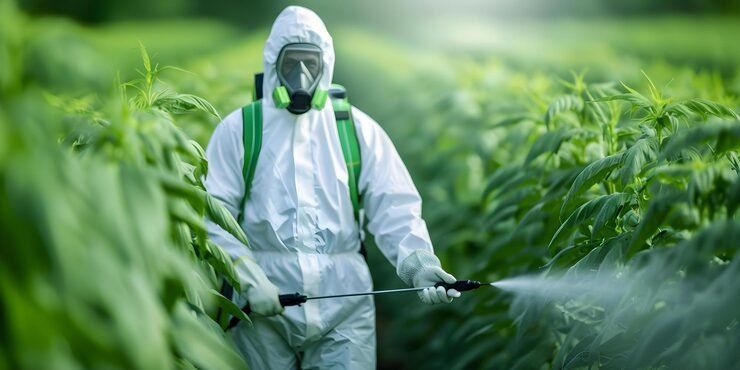
Pest management is the process of identifying, controlling, and preventing unwanted organisms that can damage crops, buildings, stored products, gardens, and public spaces. These organisms include insects, rodents, termites, mites, weeds, and other pests that can affect human activities, food production, and environmental conditions.
Context
Pest management is the process of identifying, controlling, and preventing unwanted organisms that can damage crops, buildings, stored products, gardens, and public spaces. These organisms include insects, rodents, termites, mites, weeds, and other pests that can affect human activities, food production, and environmental conditions.
The practice developed from traditional agricultural methods used to protect crops and stored food from insects and other harmful organisms. Over time, pest management expanded into residential, commercial, industrial, and public health environments. Modern approaches combine biological knowledge, environmental awareness, monitoring techniques, physical barriers, and carefully regulated chemical treatments.
Pest management is not limited to eliminating visible pests. It also involves understanding their life cycles, identifying the conditions that attract them, and reducing the possibility of future infestations. This approach helps address pest-related problems while considering human health, property protection, and environmental safety.
Understanding Common Types of Pests
Different pests create different challenges depending on their habitats and feeding patterns. Common categories include:
Insects: Ants, cockroaches, mosquitoes, flies, termites, and agricultural insects.
Rodents: Rats and mice that can damage stored food, electrical wiring, and building materials.
Weeds: Unwanted plants that compete with agricultural crops for nutrients, sunlight, and water.
Mites: Small organisms that can affect plants, stored materials, and certain indoor environments.
Stored-product pests: Beetles, moths, and other insects that contaminate grains, cereals, and food storage areas.
What Is Integrated Pest Management?
Integrated Pest Management (IPM) is an organized approach that combines different pest control methods rather than depending on a single technique. It focuses on understanding pest populations, monitoring their activity, preventing infestations, and selecting suitable control measures.
IPM considers the potential effects of pest control activities on people, animals, beneficial insects, and the surrounding environment. It is used in agriculture, residential properties, food storage facilities, and other environments where pest activity requires attention.
Importance
Pest management plays an important role in agriculture, public health, food safety, and property maintenance. Uncontrolled pest populations can damage crops, contaminate food, spread certain diseases, and weaken buildings or stored materials.
For farmers, pests can affect crop development and agricultural productivity. In residential environments, insects and rodents may contaminate kitchens, damage furniture, and create unsanitary conditions. Commercial food facilities also need pest prevention practices to maintain hygiene and protect stored products.
Major Problems Addressed by Pest Management
Crop protection: Agricultural pest management helps reduce damage caused by insects, weeds, and plant-feeding organisms.
Food protection: Appropriate storage and monitoring techniques help prevent contamination of grains and other food products.
Public health: Controlling mosquitoes, flies, and rodents can reduce exposure to certain disease-related risks.
Property maintenance: Termite and rodent management helps limit damage to wooden structures, wiring, insulation, and other materials.
Environmental protection: Integrated approaches can reduce unnecessary pesticide applications and protect beneficial organisms.
Benefits of Effective Pest Prevention
Pest prevention focuses on reducing the conditions that support pest activity. Proper waste disposal, clean surroundings, sealed food containers, building maintenance, and regular inspections can help limit common infestation problems.
In agricultural settings, monitoring crops and maintaining suitable growing conditions can help identify pest activity before it becomes widespread. These practices also support more informed decisions about when and how control methods should be applied.
Methods and Techniques
Pest management involves several methods that can be selected according to the pest species, infestation level, location, and surrounding conditions. Some methods focus on preventing pests from entering an area, while others aim to reduce existing populations.
Biological Pest Control
Biological pest control uses natural enemies of pests to manage their populations. These may include predators, parasites, and microorganisms that affect specific pest species.
Examples include:
Predatory insects: Ladybugs and certain beetles feed on plant-damaging insects such as aphids.
Parasitic organisms: Some parasitic wasps develop inside or on particular insect pests.
Microbial control: Certain naturally occurring bacteria and fungi can affect specific insects or other pest organisms.
Natural pest regulation: Birds and other wildlife may help control insect populations in suitable environments.
Biological methods require knowledge of the relationship between the target pest and the organism used for its control. Their effectiveness can depend on temperature, humidity, habitat, and pest population levels.
Physical and Mechanical Pest Control
Physical and mechanical methods involve removing pests or preventing their movement through barriers and equipment. These approaches are commonly used in homes, agricultural fields, warehouses, and food storage facilities.
Common techniques include:
Traps: Devices designed to capture rodents or monitor insect activity.
Protective screens: Mesh coverings that restrict the entry of mosquitoes, flies, and other insects.
Physical removal: Collecting visible pests or removing affected plant parts.
Sealing entry points: Closing cracks, gaps, and openings that allow rodents and insects to enter buildings.
Heat treatment: Applying controlled heat in suitable situations to manage certain pests in materials or enclosed spaces.
Chemical Pest Control
Chemical pest control involves using registered pesticides to manage particular pest populations. These products may target insects, rodents, weeds, fungi, or other organisms, depending on their approved purpose.
Chemical treatments can be applied through different methods, including spraying, baiting, dusting, and other approved application techniques. The appropriate method depends on the product label, target pest, application location, and safety requirements.
Chemical pest control requires careful handling because incorrect application can affect people, animals, plants, and the surrounding environment. Only products approved for the intended use should be considered, and label instructions must be followed.
Cultural and Preventive Pest Control
Cultural pest control involves changing environmental or agricultural practices to make conditions less suitable for pests. It is particularly relevant to farming, gardening, and food storage.
Examples include crop rotation, appropriate irrigation, removal of plant debris, proper grain storage, and maintaining clean surroundings. These practices can reduce available food, shelter, and breeding locations for many pests.
Comparison of Pest Management Methods
Method | Main approach | Common application |
|---|---|---|
Biological | Uses natural enemies | Agricultural fields and gardens |
Physical | Creates barriers | Homes and storage areas |
Mechanical | Traps or removes pests | Buildings and farms |
Chemical | Uses registered pesticides | Approved agricultural and indoor applications |
Cultural | Changes environmental practices | Farms, gardens, and food storage |
Integrated | Combines several methods | Agriculture and property management |
Recent Updates
Pest management is increasingly influenced by digital technology, environmental awareness, and improved monitoring practices. Developments between 2024 and 2026 show growing attention to early pest identification, biological control, and responsible pesticide use.
Artificial Intelligence and Digital Pest Monitoring
One notable development in India is the National Pest Surveillance System (NPSS), launched in August 2024 by the Ministry of Agriculture and Farmers Welfare. The platform uses artificial intelligence and machine learning technologies to support pest identification, crop monitoring, and agricultural protection advisories.
The system includes a mobile application and web portal. Government information published in 2025 reported that its identification capabilities covered 61 crops, while surveillance and advisory activities covered 15 major crops. This approach supports more informed decisions by helping farmers identify potential pest problems earlier.
Greater Attention to Biological Control
Biological pest control and integrated pest management are receiving increased attention as agricultural practices evolve. Farmers and agricultural institutions are exploring biological control agents, botanical formulations, and other non-chemical approaches alongside conventional methods.
Training activities conducted through agricultural institutions and government departments also emphasize appropriate pesticide handling and the responsible selection of control techniques.
Digital Pesticide Management
India has also been developing the Integrated Pesticide Management System (IPMS), a national digital platform intended to improve pesticide supply-chain monitoring, licensing information, quality oversight, and regulatory administration.
These developments indicate a broader movement toward technology-supported pest surveillance, improved agricultural information, and more organized pesticide management.
Laws or Policies
Pest management in India is influenced by agricultural regulations, pesticide safety requirements, public health measures, and environmental protection rules. These regulations help establish how pesticides are registered, manufactured, distributed, labelled, and used.
Insecticides Act, 1968
The Insecticides Act, 1968 is a central law governing insecticides in India. It regulates their import, manufacture, registration-related activities, distribution, transport, and use, with the objective of preventing risks to humans and animals.
The Central Insecticides Board and Registration Committee (CIB&RC) plays an important role in the regulatory framework. Insecticides must undergo the required registration process before they can be made available for approved uses.
Insecticides Rules, 1971
The Insecticides Rules, 1971 establish additional requirements related to pesticide registration, labelling, packaging, licensing, and safety precautions.
Product labels and accompanying leaflets contain important information, including:
Approved target pests and application purposes.
Recommended application quantities and instructions.
Precautions for handling and storage.
Toxicity information and safety symbols.
Protective equipment requirements and relevant warnings.
Agricultural products should not automatically be used in residential environments. Their approved uses and label instructions must be checked before application.
Government Pest Management Programs
The Ministry of Agriculture and Farmers Welfare promotes Integrated Pest Management through Central Integrated Pest Management Centres, Krishi Vigyan Kendras (KVKs), and State Agriculture Departments.
These institutions conduct awareness and training activities related to pest identification, biological control, pesticide safety, and preventive agricultural practices. The National Pest Surveillance System also supports government efforts to improve pest monitoring and crop protection information.
Tools and Resources
Several government platforms and agricultural resources provide information about pest identification, prevention, pesticide regulations, and crop protection.
Helpful Pest Management Resources
National Pest Surveillance System (NPSS): A digital platform for agricultural pest identification, crop monitoring, and pest-related advisories. Website: https://npss.gov.in/
Directorate of Plant Protection, Quarantine and Storage (DPPQS): Provides information about plant protection, pesticide regulations, and integrated pest management. Website: https://ppqs.gov.in/
Central Insecticides Board and Registration Committee (CIB&RC): Provides regulatory information about insecticide registration and approved pesticide uses.
Indian Council of Agricultural Research (ICAR): Publishes agricultural research, crop protection information, and educational resources. Website: https://icar.gov.in/
Krishi Vigyan Kendras (KVKs): Provide agricultural education, practical training, and information about crop protection techniques.
Practical Monitoring Tools
Common pest monitoring tools include insect traps, inspection checklists, protective screens, moisture meters, and digital pest identification applications. Their selection depends on the environment, target pest, and monitoring requirements.
FAQs
What Is Integrated Pest Management?
Integrated Pest Management (IPM) combines biological, physical, mechanical, cultural, and chemical methods to control pest populations. It emphasizes prevention, monitoring, and responsible control decisions.
What Are the Main Methods of Pest Control?
The main methods include biological control, chemical treatments, physical barriers, mechanical traps, and cultural practices. The appropriate approach depends on the pest and surrounding conditions.
How Does Pest Prevention Work?
Pest prevention involves removing food sources, reducing moisture, sealing entry points, maintaining cleanliness, and monitoring areas where pests may develop. Agricultural prevention also includes crop rotation and field inspections.
Why Is Biological Pest Control Important?
Biological pest control uses natural predators, parasites, and microorganisms to manage specific pests. It can reduce reliance on chemical treatments when suitable organisms and environmental conditions are available.
What Are the Pest Management Regulations in India?
The Insecticides Act, 1968 and Insecticides Rules, 1971 establish the main regulatory framework for insecticides in India. They cover registration, labelling, distribution, handling, and safety requirements.
Conclusion
Pest management combines identification, prevention, monitoring, and control techniques to address pest-related problems in agricultural, residential, and commercial environments. Biological, physical, mechanical, cultural, and chemical methods each have different applications and limitations. Integrated Pest Management emphasizes combining suitable approaches while considering human health and environmental protection. In India, government regulations and digital monitoring initiatives contribute to more organized and responsible pest management practices.