e70b final drive, Kubota KX121-3, cat 303.5 final drive, kx71 3 final drive, bobcat e50 final drive, kubota kx121 3 final drive motor, hydraulic drive
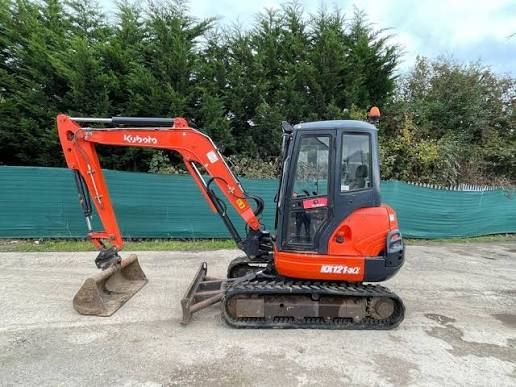
The final drive motor is an important component of a tracked excavator. It converts hydraulic power into the rotational force needed to move the tracks, allowing the machine to travel across construction sites, climb suitable slopes, and position itself for excavation. In the Kubota KX121-3 , the final drive system plays a central role in supporting everyday movement and operation. Understanding how the final drive works can help equipment owners, operators, and maintenance technicians recognize common problems, plan inspections, and make informed decisions about replacement components. This guide explains the design, operating principles, features, applications, and maintenance considerations of the Kubota KX121-3 final drive motor. The KX121-3 is part of Kubota's compact excavator range. Its travel system combines hydraulic motor operation with mechanical gear reduction to provide controlled movement and useful track-driving torque. Exact replacement specifications and part compatibility can vary with machine version and serial number, so checking the correct parts documentation is an important first step.
What Is a Kubota KX121-3 Final Drive Motor?
A final drive motor, also known as a travel motor or track drive motor, is a hydraulic and mechanical assembly that powers an excavator's tracks. It is generally installed at each track's drive sprocket, where it delivers the torque required to rotate the track.
The assembly typically contains two main systems:
Hydraulic motor: Converts pressurized hydraulic fluid into rotational movement.
Planetary gearbox: Reduces the motor's rotational speed while increasing the torque delivered to the drive sprocket.
The final drive connects the hydraulic travel system to the excavator's undercarriage. When the operator moves the travel controls, hydraulic fluid is directed to the travel motor. The motor rotates, and the reduction gears transfer that movement to the sprocket, which drives the track.
The KX121-3 has a two-speed travel system, with low and high travel speeds available. The manufacturer's published specifications list travel speeds of approximately 2.7 km/h in low speed and 5.0 km/h in high speed for the standard model.
Design and Main Components
The final drive assembly is designed to withstand repeated movement, changing ground conditions, and substantial mechanical loads. Its components work together to deliver controlled travel force.
Hydraulic piston motor
Many excavator travel motors use an axial piston design. In this arrangement, pistons move within a rotating cylinder block, creating rotational force as hydraulic fluid enters and leaves the motor.
The motor's internal swash plate helps determine piston movement and displacement. In variable-displacement designs, changing the displacement allows the motor to operate at different speed and torque settings.
The exact internal motor design and specifications should be confirmed using the service documentation for the machine's particular version.
Planetary gear reduction
The planetary gearbox reduces the high rotational speed of the hydraulic motor and increases the torque available at the sprocket.
Its main components include:
Sun gear
Planet gears
Planet carrier
Ring gear
Gear housing
The gears distribute mechanical forces through the reduction assembly. This arrangement allows a compact final drive to deliver the torque required to move a relatively heavy tracked machine.
Drive sprocket connection
The output of the reduction gearbox connects to the excavator's drive sprocket. As the sprocket rotates, its teeth engage with the track links and pull the track around the undercarriage.
The mounting arrangement, bolt pattern, and dimensions must match the machine. Incorrect compatibility can lead to installation difficulties, premature wear, or damage.
Seals and bearings
Seals help prevent hydraulic oil and gearbox lubricant from escaping and protect internal components against dirt and water. Bearings support rotating components and help maintain alignment under load.
Seal condition is particularly important because contamination or lubricant loss can lead to internal wear and eventual component failure.
3. How the Final Drive Motor Works
The final drive operates as part of the excavator's hydraulic travel system. The process begins when the operator moves the travel levers or pedals.
Hydraulic fluid is supplied: The excavator's hydraulic pump supplies pressurized fluid to the travel control system.
Travel controls direct the flow: The control valve directs hydraulic fluid toward the selected travel motor, depending on the operator's input.
The motor rotates: Hydraulic pressure and flow act on the motor's internal components, producing rotational movement.
The gearbox reduces speed: The planetary gear system reduces rotational speed and increases the available output torque.
The sprocket drives the track: The final drive rotates the sprocket, which engages with the track links and moves the excavator.
The machine changes direction: The travel control system can regulate the motors on each side to move the excavator forward, backward, or through a turn.
The system also allows the machine to travel at different speeds. Low speed generally provides greater available torque for demanding travel conditions, while high speed allows faster movement when the ground and operating conditions are suitable.
The motor, gearbox, hydraulic control valve, and undercarriage must all function correctly for the machine to travel smoothly.
4. Key Features and Technical Considerations
A final drive motor should be evaluated according to its compatibility, operating characteristics, and condition rather than by appearance alone.
Feature | Function | Why it matters |
|---|---|---|
Hydraulic motor | Converts hydraulic energy into rotation | Provides the power for track movement |
Planetary gearbox | Reduces speed and increases torque | Supports movement under load |
Two-speed travel | Allows different travel settings | Provides flexibility across suitable terrain |
Sealing system | Retains fluid and limits contamination | Helps protect internal components |
Bearings | Support rotating parts | Maintain alignment and smooth operation |
Output connection | Transfers torque to the sprocket | Must match the undercarriage |
Hydraulic ports | Connect the motor to the hydraulic circuit | Must match the machine's hydraulic lines |
Mounting dimensions | Secure the assembly to the machine | Ensure correct installation and alignment |
For replacement research, the part number RD118-61290 is listed for some KX121-3 configurations. Other related model versions and serial ranges may use different part numbers. One supplier also lists RD138-61292 and RD138-61290 as alternate references, but these should not be assumed interchangeable without confirmation.
Types and Replacement Options
When servicing a KX121-3 travel system, owners may encounter several different component and replacement options. Understanding the differences helps avoid purchasing a part that does not match the original assembly.
Option | Description | Typical consideration |
|---|---|---|
Complete final drive | Hydraulic motor and planetary gearbox supplied as an assembly | Replaces the complete unit when internal damage is extensive |
Hydraulic motor only | Replacement motor without the complete reduction gearbox | Suitable only when the gearbox is serviceable and the motor is compatible |
Gearbox assembly | Replacement mechanical reduction unit | Used when gear damage is isolated to the reduction section |
Rebuilt final drive | Existing assembly disassembled, inspected, and repaired | Depends on the condition of the housing and internal parts |
Repair kit | Selected seals, O-rings, and other service components | Used for specific repairs where the remaining components are in good condition |
Complete replacement versus rebuilding
A complete replacement may be considered when the final drive has severe internal damage, extensive wear, or contamination affecting multiple components. A rebuild may be possible when the housing, gears, and other reusable parts are within acceptable service limits.
The decision depends on the actual failure, availability of qualified repair services, parts compatibility, and the overall cost of repair compared with replacement.
6. Benefits and Limitations
The final drive motor provides several important functions, but its design also has limitations that should be understood during equipment operation and maintenance.
Benefits
Controlled movement: Hydraulic control allows the operator to regulate track speed and direction.
High torque output: The planetary gearbox increases output torque, helping the excavator move under suitable working loads.
Compact construction: Combining a hydraulic motor with a reduction gearbox provides substantial driving force in a relatively compact assembly.
Two-speed operation: The travel system offers low- and high-speed settings for different operating conditions.
Independent track movement: Separate travel motors allow the machine to turn by varying the movement of the left and right tracks.
Limitations
Exposure to harsh conditions: Mud, abrasive soil, water, and debris can damage seals and contribute to component wear.
Hydraulic dependence: Low hydraulic pressure, contaminated oil, or control valve problems can affect travel performance.
Internal mechanical wear: Gears and bearings can deteriorate with prolonged use, excessive loads, or inadequate lubrication.
Repair complexity: Internal motor and gearbox repairs require suitable tools, technical knowledge, and correct assembly procedures.
Compatibility restrictions: Similar-looking final drives may differ in mounting dimensions, hydraulic connections, gear ratios, or internal design.
A final drive problem may also be caused by an issue elsewhere in the travel circuit. Accurate diagnosis is necessary before deciding whether the motor itself needs repair or replacement.
7. Common Problems and Their Possible Causes
Recognizing unusual travel behavior can help operators arrange an inspection before a minor issue becomes a larger repair.
Symptom | Possible causes | Suggested checks |
|---|---|---|
One track moves slowly | Hydraulic flow restriction, motor wear, or gearbox damage | Compare travel behavior and inspect the hydraulic circuit |
Weak travel force | Low system pressure, internal leakage, or mechanical wear | Check pressure and inspect the motor and reduction unit |
Unusual grinding noise | Worn gears, damaged bearings, or insufficient lubrication | Inspect gearbox lubricant and assess internal components |
Oil leakage | Damaged seals, loose connections, or worn sealing surfaces | Identify the fluid source and inspect the affected area |
Excessive heat | High load, restricted hydraulic flow, or internal friction | Review operating conditions and check the hydraulic system |
Track movement is jerky | Air in the hydraulic system, control problems, or inconsistent flow | Inspect the hydraulic circuit and travel controls |
These symptoms are not definitive proof of final drive failure. For example, a slow track may result from a faulty travel control valve, damaged hoses, or another hydraulic issue. Both sides of the machine and the hydraulic system should be evaluated as part of the diagnosis.
8. Latest Trends and Innovations in Final Drive Technology
Excavator travel systems continue to benefit from improvements in hydraulic control, component manufacturing, monitoring, and diagnostic tools. Some developments are relevant to newer machines, while others can support the maintenance of older equipment such as the KX121-3.
Improved hydraulic efficiency
Modern hydraulic systems may use improved pump controls, more precise flow management, and reduced internal leakage to support efficient machine operation. These technologies can help manage energy use during travel and other excavator functions.
However, upgrades to a particular older machine must be evaluated for compatibility rather than assumed to be available as direct replacements.
Advanced materials and sealing
Improved seal materials, surface treatments, and precision manufacturing can help reduce wear and leakage under suitable operating conditions. The benefits depend on the component's design, operating environment, and maintenance.
Diagnostic equipment
Technicians increasingly use hydraulic pressure testing, oil analysis, and electronic diagnostic equipment to identify the causes of machine performance problems.
For a KX121-3, hydraulic pressure testing and a detailed inspection of the mechanical reduction system can help distinguish motor faults from issues elsewhere in the travel circuit.
Parts identification and digital catalogues
Digital parts catalogues and serial-number-based lookup systems make it easier to identify replacement parts. Kubota's published parts information provides model-specific references, although dealers may be able to clarify information not readily available in public catalogues.
Companies and Solutions for Replacement Parts
Replacement final drives are available through equipment dealers, specialist parts suppliers, and aftermarket manufacturers. The correct source depends on the required part, the machine's serial number, warranty needs, and access to technical support.
Company or supplier | Type of solution | What to check |
|---|---|---|
Kubota | Genuine parts and authorized dealer support | Original part number, machine serial number, and service availability |
KYB | Hydraulic motor and final drive technology | Original equipment references and exact assembly compatibility |
BK Drilling | Replacement final drive assemblies | Listed model compatibility, warranty terms, and part references |
Final Drive Parts | Aftermarket replacement assemblies and installation kits | Replacement specifications, included components, and support |
Final Drive Motors | Replacement travel motor assemblies | Exact fitment, warranty coverage, and shipping arrangements |
Public resources for further research:
- Kubota official website
- KYB official website
- BK Drilling KX121-3 final drive listing
- Final Drive Parts replacement assembly
- Final Drive Motors product information
These sources describe different types of parts and services, rather than an independently verified ranking. A listed replacement should be checked against the original assembly and the machine's serial number before an order is placed. Warranty terms and availability may vary by supplier and location.
10. How to Choose the Right Final Drive Motor
Choosing a replacement involves confirming the correct part, understanding the failure, and evaluating the condition of the machine's existing travel system.
Step 1: Identify the machine version
Record the complete model designation, serial number, and any relevant model suffix. The KX121-3, KX121-3S, and other related versions may have different parts or configuration requirements.
Step 2: Confirm the original part number
Check the existing motor's identification plate, the machine's parts catalogue, or the information provided by an authorized Kubota dealer. RD118-61290 is one listed reference for the KX121-3, but it should not be treated as universal for every version.
Step 3: Determine the type of failure
Before purchasing a complete assembly, establish whether the problem is caused by the hydraulic motor, gearbox, travel control valve, hydraulic hoses, or undercarriage.
A technician may need to perform hydraulic pressure testing and inspect the gearbox lubricant to identify the actual fault.
Step 4: Compare replacement specifications
Check the following:
Hydraulic motor type and displacement
Hydraulic port arrangement and dimensions
Gearbox reduction and output configuration
Mounting and sprocket bolt patterns
Overall assembly dimensions
Applicable warranty and repair support
Step 5: Review the total repair requirements
Consider the replacement part cost alongside shipping, installation labor, hydraulic fluid, seals, and any related repairs. For an older excavator, the condition of the rest of the undercarriage may also affect the repair decision.
11. Maintenance and Best Practices
Routine inspections help identify wear and leakage before they lead to significant travel problems. Maintenance should follow the Kubota service manual for the specific machine and should be performed by appropriately trained personnel.
Daily inspection
Look for hydraulic oil leaks around the travel motors and connecting hoses.
Check for unusual sounds or changes in track movement.
Inspect the undercarriage for accumulated mud, stones, and other debris.
Observe whether the machine travels and turns consistently.
Report changes in travel performance before continuing demanding work.
Periodic maintenance
Inspect the gearbox lubricant according to the service schedule and use the specified lubricant type and quantity. Check seals, hoses, fasteners, and mounting areas for damage or wear.
Avoid allowing dirt to enter hydraulic connections during repairs. Contaminated hydraulic oil can cause damage to precision motor components and other parts of the hydraulic system.
Safe repair practices
Before working on the final drive, park the excavator on firm, level ground, lower the attachments, shut down the engine, and release stored hydraulic pressure according to the service manual. Secure the machine against unintended movement.
The final drive assembly is heavy, and its removal may require appropriate lifting equipment. Internal motor or gearbox disassembly should be handled by a qualified technician with access to the correct service procedures.
12. Frequently Asked Questions
1. What does the final drive motor do on a Kubota KX121-3?
It converts hydraulic power into rotational movement and transfers that power through a reduction gearbox to the track sprocket. This allows the excavator to move forward, backward, and turn.
2. What is the part number for the KX121-3 final drive motor?
RD118-61290 is a commonly listed reference for the KX121-3 complete final drive. Related part numbers are also listed for some variants, so confirm the exact reference using the machine's serial number and original parts documentation.
3. Can a faulty final drive be repaired?
Yes, depending on the type and extent of damage. Repairs may involve replacing seals, bearings, gears, or hydraulic motor components. Severe internal damage or extensive wear may make a complete replacement more practical.
4. Why is one track slower than the other?
Possible causes include hydraulic flow restrictions, internal motor leakage, gearbox damage, or a problem with the travel control system. A qualified technician can perform diagnostic tests to isolate the issue.
5. How often should the final drive lubricant be changed?
The correct service interval depends on the machine's model-specific maintenance schedule and operating conditions. Refer to the Kubota service manual for the recommended inspection and replacement intervals rather than relying on a general interval for all excavators.
6. Can an aftermarket final drive be used?
An aftermarket final drive may be suitable if it matches the machine's required specifications and is compatible with the exact model and serial range. Check its technical documentation, warranty conditions, and installation requirements before use.
Conclusion
The Kubota KX121-3 final drive motor is a key part of the excavator's travel system, combining hydraulic power with mechanical gear reduction to move the tracks. Understanding its components and working principles makes it easier to recognize possible faults, plan maintenance, and assess replacement options.
The most important considerations when servicing this assembly are accurate part identification, correct diagnosis, hydraulic cleanliness, and compliance with the manufacturer's maintenance procedures. Whether repairing the original unit or selecting a replacement, confirming compatibility and addressing the actual cause of the problem can help support safe, reliable excavator operation.