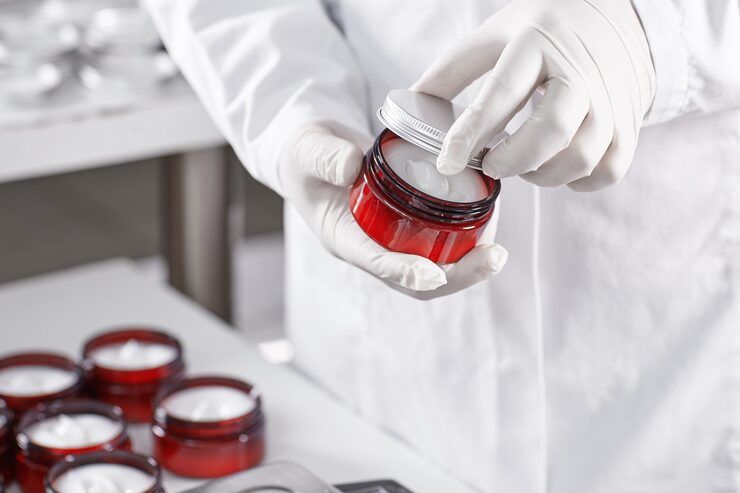
Understand cosmetics private labeling, manufacturing processes, product development, packaging, regulatory requirements and how brands operate without factories.
Cosmetics private labeling is a business model in which a brand uses cosmetic products manufactured by an external manufacturer and markets them under its own brand name. Instead of establishing a manufacturing facility, purchasing production machinery, and managing the entire production process, the brand works with an existing cosmetics manufacturer that handles formulation, production, filling, or packaging.
This approach is commonly used in skincare, haircare, makeup, body care, and personal hygiene product categories. It allows businesses to concentrate on brand identity, product selection, packaging design, distribution planning, and customer communication without directly operating a factory.
The concept comes from the broader private-label manufacturing model used across several consumer industries. In cosmetics, manufacturers may provide ready-developed formulations or work with a brand to adjust certain product characteristics according to an agreed specification.
However, private labeling does not mean that a brand has no responsibilities. Product safety, accurate labeling, ingredient information, quality documentation, and applicable regulatory requirements remain important considerations.
How cosmetics private labeling works
The process generally begins when a business identifies a product category and approaches a manufacturer that produces cosmetics. The manufacturer explains its available formulations, packaging formats, production capabilities, and documentation.
The brand then selects a suitable product, reviews its specifications, finalizes packaging and labeling details, and coordinates production. Once the finished products are prepared, they are supplied under the brand's identity.
A typical arrangement may involve the following stages:
Product selection: Identifying categories such as facial cleansers, moisturizers, shampoos, conditioners, body lotions, or makeup products.
Formulation selection: Choosing an existing formulation or discussing permitted modifications with the manufacturer.
Packaging development: Selecting containers, closures, labels, and outer packaging.
Documentation review: Examining ingredient lists, product specifications, safety information, and manufacturing records.
Production coordination: Confirming product quantities, packaging requirements, and production arrangements.
Distribution preparation: Organizing storage, inventory records, product identification, and distribution channels.
Private label and contract manufacturing differences
Private labeling and contract manufacturing are related but not identical. Private labeling often involves using an existing formulation under another company's brand, whereas contract manufacturing can involve more detailed product development according to a brand's specifications.
Business model | Main arrangement | Formulation approach |
|---|---|---|
Private labeling | Existing products marketed under a brand's identity | Usually existing formulations |
Contract manufacturing | External manufacturer produces products for a brand | Existing or customized formulations |
In-house manufacturing | Brand operates its own production facility | Developed and produced internally |
White labeling | Manufacturer supplies standardized products for multiple brands | Generally standardized formulations |
The boundaries between these models can vary between manufacturers. Written agreements and product specifications help clarify the actual arrangement.
Importance
Cosmetics private labeling has become relevant as consumer interest in skincare, personal grooming, haircare, and specialized beauty products continues to influence the cosmetics industry. Businesses entering this sector may not have the technical infrastructure or manufacturing experience required to establish their own production facilities.
An external manufacturing arrangement separates brand management from physical production. This can make the operating structure more manageable for businesses that want to focus on product positioning, packaging, market research, and distribution.
The model is also relevant to established retailers, online businesses, beauty entrepreneurs, and companies expanding into additional personal care categories.
Why brands use external cosmetics manufacturers
Operating a cosmetics factory involves several activities, including formulation development, ingredient procurement, equipment maintenance, production planning, quality checks, packaging, and inventory management.
Working with an external manufacturer means that certain technical activities can be handled by an organization with existing production infrastructure. However, the brand still needs to understand the manufacturing process and establish clear responsibilities.
Common reasons for using this model include:
Manufacturing infrastructure: Access to existing production equipment and facilities.
Technical knowledge: Access to formulation specialists and production personnel.
Product range expansion: The ability to coordinate different product categories through external manufacturing arrangements.
Operational planning: Less direct involvement in factory operations and equipment management.
Brand development: More attention can be given to packaging, positioning, and product communication.
Challenges in private label cosmetics
Although the model reduces the need to operate a factory, it introduces other considerations. A brand depends on the manufacturer's production standards, ingredient sourcing, documentation, communication, and ability to maintain consistent specifications.
Important challenges include formulation consistency, packaging compatibility, product stability, production delays, inventory planning, and regulatory responsibilities. Changes to an ingredient, supplier, manufacturing process, or packaging component may require additional review.
Brands must also avoid assuming that an existing product formulation is automatically suitable for every market or intended use. Product requirements depend on ingredients, claims, intended consumers, and applicable regulations.
Recent Updates
The cosmetics private-labeling industry has been influenced by changes in consumer preferences, manufacturing technology, ingredient transparency, packaging development, and regulatory oversight. From 2024 through 2026, greater attention has been given to product documentation, manufacturing traceability, ingredient disclosure, and safety substantiation.
Manufacturers are also adapting production processes to accommodate different product textures, packaging formats, and formulation requirements. Smaller production arrangements and more flexible product development processes have become relevant to businesses exploring specialized cosmetics categories.
Changes in formulation and manufacturing
Cosmetics manufacturers increasingly work with a range of formulation requirements, including lightweight moisturizers, fragrance-free skincare, plant-derived ingredients, and products developed for particular skin and hair care routines.
These developments have increased the importance of ingredient documentation and formulation compatibility. A change in formulation may affect product stability, packaging compatibility, preservation, and labeling information.
Digital production and quality management
Digital systems are becoming more relevant to cosmetics manufacturing operations. Some manufacturers use digital inventory records, batch tracking systems, production monitoring, and electronic quality documentation.
These systems can help maintain records of ingredient batches, production stages, packaging details, and product movement. They also support communication between manufacturers, brand owners, and other participants in the supply chain.
Sustainability and packaging developments
Packaging is another area receiving attention. Some businesses are exploring recyclable packaging materials, refillable containers, reduced packaging components, and packaging made with recycled materials.
However, environmental claims require appropriate evidence. A container should not automatically be described as recyclable, biodegradable, or environmentally beneficial without considering its material composition and the availability of suitable disposal or processing facilities.
Laws or Policies
Cosmetics private labeling involves regulatory responsibilities because products intended for application to the skin, hair, nails, or other external body areas are generally covered by cosmetics-related regulations.
The exact requirements depend on the country where a product is manufactured, imported, distributed, or marketed. Product classification is particularly important because certain products with medical or therapeutic claims may fall under additional regulatory frameworks.
Cosmetic product safety and labeling
Regulatory frameworks commonly address several areas:
Ingredient compliance: Cosmetic ingredients must comply with applicable restrictions, permitted-use conditions, and prohibited-substance requirements.
Product safety: Appropriate information and evidence must support the safety of the finished formulation.
Labeling: Product labels may need ingredient declarations, product identification, manufacturer or responsible-person details, warnings, and usage information.
Manufacturing practices: Production facilities are expected to follow applicable hygiene, quality management, and manufacturing requirements.
Recordkeeping: Relevant manufacturing, testing, and product information records may need to be maintained.
Regulatory requirements in different markets
In the United States, the Modernization of Cosmetics Regulation Act of 2022 (MoCRA) introduced additional requirements for cosmetic manufacturing facilities and responsible persons. These include applicable facility registration, product listing, safety substantiation records, and serious adverse event reporting.
The FDA updated its industry guidance in 2024 and its Cosmetics Direct registration materials in 2026. Facility registration generally requires renewal every two years, while responsible persons must update applicable product listings annually. Certain exemptions apply under specified conditions.
In the European Union, Regulation (EC) No 1223/2009 establishes requirements for cosmetic product safety, responsible persons, good manufacturing practices, product information files, and product notification through the Cosmetic Products Notification Portal (CPNP).
A responsible person must ensure that applicable requirements are fulfilled before a cosmetic product is placed on the market.
Responsibilities of brands and manufacturers
An important consideration in private labeling is that manufacturing arrangements do not automatically transfer every regulatory responsibility to the factory.
Depending on the jurisdiction and the specific arrangement, the brand owner, manufacturer, importer, distributor, or designated responsible person may have different obligations.
Before production, written agreements should clarify:
Responsibility for ingredient and formulation documentation.
Product safety assessment and supporting records.
Manufacturing and quality-control procedures.
Label accuracy and regulatory review.
Batch identification and traceability.
Handling of consumer complaints and adverse events.
Procedures for product withdrawal or recall when necessary.
These are general regulatory considerations rather than legal advice. Applicable requirements should be checked with the relevant national regulatory authority and qualified compliance professionals before a product is introduced into a particular market.
Tools and Resources
Several technical and digital resources help businesses understand cosmetics private labeling, manufacturing requirements, product documentation, and regulatory considerations.
Regulatory information websites
Official regulatory websites provide information about cosmetic ingredients, labeling, manufacturing, product classification, and applicable compliance requirements.
The US Food and Drug Administration publishes cosmetics-related regulatory guidance, while the European Commission provides information about cosmetic product legislation and notification procedures.
Formulation and ingredient databases
Ingredient databases can help readers understand cosmetic ingredients, their common functions, and their use in different formulations.
The International Nomenclature of Cosmetic Ingredients (INCI) naming system is widely used to identify cosmetic ingredients on product labels. Ingredient identification is important when reviewing formulation documents and preparing product information.
Quality management and documentation tools
Manufacturers may use electronic systems to organize production and quality records. Common documentation includes:
Product specification sheets.
Ingredient and raw material records.
Batch manufacturing records.
Product stability reports.
Microbiological testing records, where applicable.
Packaging compatibility information.
Finished-product quality inspection records.
Manufacturing standards
ISO 22716 provides guidelines for Good Manufacturing Practices (GMP) in cosmetics. It addresses areas such as personnel, premises, equipment, raw materials, production, quality control, storage, and documentation.
Understanding these guidelines helps explain how manufacturing processes are organized and monitored within cosmetics production facilities.
FAQs
What is cosmetics private labeling?
Cosmetics private labeling is a manufacturing arrangement in which an external manufacturer produces cosmetic products that are marketed under another company's brand name. The arrangement commonly involves existing formulations, packaging selection, labeling, and production coordination.
How do brands launch cosmetics without owning a factory?
Brands generally work with an established cosmetics manufacturer that has production facilities and technical capabilities. They select products, review formulations, finalize packaging, coordinate documentation, and arrange production under their brand identity.
What is the difference between private label and contract manufacturing cosmetics?
Private labeling generally uses existing formulations supplied by a manufacturer. Contract manufacturing may involve customized formulations or more detailed product development based on a brand's specifications. The actual arrangement depends on the manufacturing agreement.
Who is responsible for cosmetic product safety in private labeling?
Responsibility depends on the applicable regulatory framework and business arrangement. Manufacturers, brand owners, importers, and designated responsible persons may have different obligations concerning product safety, documentation, labeling, and regulatory compliance.
What documents are important in private label cosmetics manufacturing?
Important documents may include ingredient lists, product specifications, safety assessment records, stability information, batch records, manufacturing documentation, and packaging details. The exact documentation depends on the product and intended market.