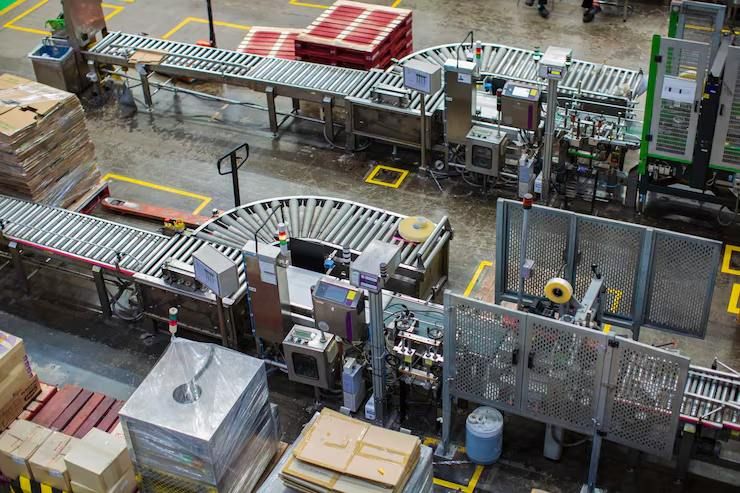
Heavy industrial packaging and baling systems are important parts of modern manufacturing, recycling, warehousing, and waste management operations.
These systems are designed to compress, package, bundle, and prepare large quantities of materials for storage, transportation, or further processing. Understanding heavy industrial packaging and baling systems provides useful insight into how industries manage bulky materials, improve handling efficiency, and organise production activities.
Industrial packaging involves preparing products and materials for protection, storage, and transportation. Depending on the industry, this may include wrapping, strapping, palletising, container filling, and protective packaging. Baling systems focus specifically on compressing loose materials into compact bundles, commonly known as bales.
These technologies developed in response to the growing need to handle large material volumes in factories, agricultural facilities, distribution centres, and recycling plants. Manual packaging and material handling can become difficult when dealing with heavy loads or continuous production. Mechanical and automated equipment helps organise these activities while reducing repetitive physical handling.
Main Types of Industrial Packaging and Baling Equipment
Different industrial environments require different equipment depending on material characteristics, production volumes, and packaging requirements.
Industrial balers: Compress materials such as cardboard, paper, plastics, textiles, and certain metal scrap into manageable bales.
Automatic packaging machines: Perform packaging operations with limited manual intervention.
Strapping systems: Secure packages and bundles using plastic or steel straps.
Stretch wrapping machines: Apply stretch film around palletised products to improve load stability.
Palletising systems: Arrange products into organised layers for storage and transportation.
Compaction equipment: Reduce the volume of suitable waste and industrial materials.
Each system performs a specific function. Some equipment handles individual products, while other machinery processes large quantities of loose or bulky materials.
How Industrial Baling Systems Work
A typical industrial baler uses hydraulic, mechanical, or other compression mechanisms to reduce material volume. Materials are placed into a chamber, where pressure is applied through a moving plate or ram. Once the material reaches the required compression level, the bale is secured using wire, straps, or another binding method.
Vertical balers generally require materials to be loaded from the front or top, depending on their design. Horizontal balers are commonly used in operations that process larger material volumes and may incorporate conveyor-fed loading arrangements.
Importance
Heavy industrial packaging and baling systems support industries that manage large quantities of products, raw materials, and waste. Manufacturing facilities use packaging equipment to prepare finished products, while recycling plants rely on balers to organise recyclable materials. Warehouses and distribution centres also use packaging systems to maintain organised loads during storage and transportation.
These systems address several practical challenges. Bulky materials can occupy significant storage space, loose waste can be difficult to transport, and inconsistent packaging can create handling problems. Compression and packaging equipment help standardise material dimensions and improve the organisation of industrial workflows.
Improving Material Handling and Storage
One important function of industrial baling equipment is volume reduction. Compressing suitable materials into compact bales can make storage areas easier to organise and simplify movement within industrial facilities.
For example, cardboard packaging waste generated by warehouses can accumulate quickly. A baling system compresses this material into bundles that are easier to stack, identify, and transport for recycling.
Supporting Transportation and Workplace Organisation
Packaging systems help prepare materials for movement between production facilities, warehouses, and distribution locations. Strapping and stretch wrapping can help maintain load stability when equipment is correctly selected and operated.
Industrial packaging and baling equipment can also influence workplace organisation through:
Reduced manual handling: Mechanical equipment performs repetitive compression and packaging tasks.
Improved material identification: Standardised packaging makes products and materials easier to classify.
Space management: Compressed materials may require less storage space than loose materials.
Process consistency: Automated equipment can repeat packaging operations according to configured settings.
Waste segregation: Different baling arrangements can support the separation of recyclable material categories.
Performance Factors in Industrial Packaging
The efficiency of heavy industrial packaging and baling systems depends on several technical and operational conditions. Equipment capacity, material characteristics, operating speed, compression force, and maintenance practices all influence performance.
| Performance factor | Meaning | Operational importance |
|---|---|---|
| Throughput | Amount of material processed over a period | Indicates processing capacity |
| Compression ratio | Relationship between original and compressed material volume | Helps assess volume reduction |
| Cycle time | Time required to complete one operating cycle | Influences processing speed |
| Bale density | Weight of material within a given bale volume | Affects storage and handling |
| Energy consumption | Electricity or fuel used during operation | Helps evaluate energy requirements |
| Equipment availability | Time machinery is ready for operation | Influences production continuity |
These measurements should be evaluated together. A machine with a short cycle time may not necessarily achieve higher overall productivity if material loading, unloading, or maintenance causes delays.
Recent Updates
Developments in heavy industrial packaging and baling systems from 2024 through 2026 have increasingly focused on automation, energy management, operational monitoring, and material recovery. Industries are examining ways to improve packaging consistency while managing changing material requirements and environmental considerations.
Automation and Smart Packaging Systems
Automation is becoming more common in industrial packaging environments. Sensors, programmable logic controllers, and digital control interfaces allow machines to perform repetitive tasks according to configured operating parameters.
Automated baling systems may incorporate conveyor belts, automatic feeding mechanisms, bale ejection arrangements, and monitoring functions. These features can reduce the need for repeated manual intervention, although their effectiveness depends on material consistency and facility layout.
Energy Efficiency and Equipment Monitoring
Energy consumption is an important consideration in heavy industrial machinery. Manufacturers are incorporating improved hydraulic systems, variable-speed drives, and control technologies into certain equipment designs to manage energy use.
Digital monitoring platforms can track operating hours, hydraulic pressure, temperature, cycle times, and machine status. This information helps facility operators identify unusual operating patterns and plan maintenance activities.
Sustainable Packaging and Material Recovery
Environmental considerations are influencing industrial packaging practices. Businesses are examining recyclable packaging materials, reusable transport packaging, reduced packaging waste, and improved separation of recyclable materials.
Baling systems play a role in material recovery by preparing cardboard, paper, plastic, and selected metal materials for further processing. However, recycling suitability depends on contamination levels, material composition, and the requirements of the receiving recycling facility.
Integration with Industrial Production Lines
Modern packaging equipment is increasingly integrated with conveyors, sorting systems, robotic handling equipment, and warehouse management platforms. This integration allows materials to move through multiple processing stages with fewer separate handling activities.
Industrial facilities are also examining modular equipment arrangements. These systems can be configured around different production layouts, although installation requirements depend on available space, material flow, electrical capacity, and safety arrangements.
Tools and Resources
Several technical resources help industrial operators understand equipment capacity, packaging requirements, energy use, and material handling performance.
Industrial Performance Calculators
Throughput calculators help estimate how much material a machine can process within a particular operating period. Bale density calculators compare material weight with compressed volume, while cycle-time calculations help assess the time required for repeated machine operations.
Basic measurements include:
Throughput: Total material processed divided by operating time.
Bale density: Bale weight divided by bale volume.
Energy intensity: Energy consumed divided by the quantity of material processed.
Equipment utilisation: Actual operating time compared with available operating time.
These calculations provide general performance indicators. Actual results depend on operating conditions and measurement accuracy.
Technical Websites and Reference Materials
Several organisations publish information related to packaging, recycling, machinery, and industrial safety.
Packaging Machinery Manufacturers Institute (PMMI): Provides industry information, packaging technology resources, and educational materials.
Institute of Packaging Professionals (IoPP): Covers packaging design, materials, and professional knowledge.
Occupational Safety and Health Administration (OSHA): Publishes workplace safety information relevant to industrial machinery and material handling.
U.S. Environmental Protection Agency (EPA): Provides information about waste reduction, recycling, and resource management.
International Organization for Standardization (ISO): Publishes standards covering quality management, environmental management, and occupational health and safety.
Equipment manuals, maintenance schedules, technical drawings, and workplace inspection templates are also useful resources for understanding machinery requirements and operating procedures.
FAQs
What are heavy industrial packaging and baling systems?
Heavy industrial packaging and baling systems are machines used to package products, secure loads, and compress bulky materials. They are commonly used in manufacturing, recycling, agriculture, and warehousing operations.
How do industrial baling systems improve efficiency?
Industrial baling systems compress loose materials into compact bundles, helping organise storage and transportation. Automated feeding and compression mechanisms can also reduce repetitive manual handling.
What materials can industrial baling machines process?
Depending on the machine design, industrial balers can process cardboard, paper, plastic, textiles, agricultural materials, and selected metal scrap. Material compatibility depends on density, dimensions, moisture content, and equipment specifications.
What factors affect industrial packaging machine performance?
Processing capacity, cycle time, material characteristics, energy consumption, equipment condition, and operator procedures influence packaging machine performance. Regular monitoring helps identify operational changes.
What are the recent trends in heavy industrial packaging systems?
Current developments include automated material feeding, digital monitoring, energy management, recyclable packaging materials, and integration with industrial production lines. Adoption varies according to facility requirements and equipment capabilities.
Conclusion
Heavy industrial packaging and baling systems support manufacturing, recycling, warehousing, and material transportation activities. Their performance depends on equipment design, material characteristics, processing capacity, energy consumption, and maintenance practices. Automation, digital monitoring, and sustainable material management are influencing developments across the industry. Understanding these factors provides a foundation for evaluating industrial packaging processes and their role in modern material handling.